ServicesFleet Truck Insurance
Fleet Truck Insurance in Decatur
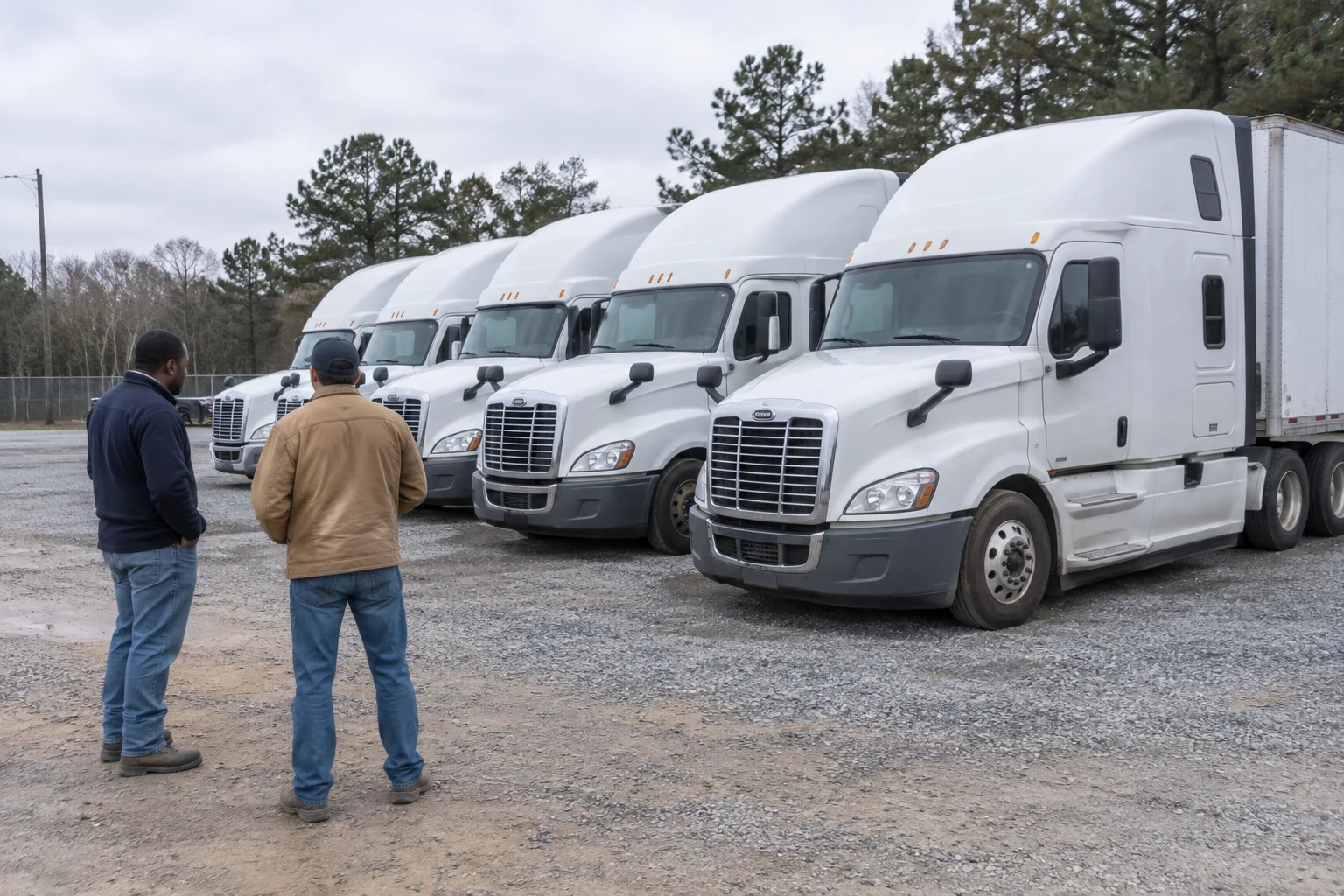
Running three trucks or thirty, you need one policy that keeps up with new units, new drivers and new contracts. We set up fleet coverage around how your operation really runs, then check back so it still fits months later.
Every truck and driver under one program
Fleet truck insurance puts your tractors, trailers and drivers on one program instead of a stack of separate policies. Day to day, that means you renew once a year, the federal filings for your DOT number and MC authority come from the same place, and there is a single office to phone when a shipper needs a certificate of insurance.
Writing the policy is the first step, not the last. A fleet changes constantly: you sell a unit, a driver leaves, a new customer asks for higher cargo limits. So after your coverage starts, we reach out to confirm the unit schedule and driver list still match what is actually running, and we explain exactly what to send us when something changes. Current lists keep a claim from stalling over a truck or driver nobody added.
What we build into a fleet program
Primary auto liability
The coverage the FMCSA requires for your MC authority, with the federal filing handled for you. We match the limit to your contracts, since many shippers and brokers ask for more than the legal minimum.
Physical damage on scheduled units
Each tractor, straight truck or trailer is listed with its own stated value. We walk through deductibles with you so a single bent bumper does not eat into your cash flow.
Motor truck cargo
Cargo coverage sized to what you haul and the most valuable load you carry. We look for exclusions that matter to your freight, like reefer breakdown or unattended vehicles.
Driver list and MVR review
We gather motor vehicle records for each driver before quoting. If a driver's history will raise the premium or get excluded, you hear about it up front, not at the first claim.
Add-ons when you need them
Trailer interchange, non-trucking liability for leased owner-operators and general liability can be built into the same program instead of bought piecemeal.
Signs it is time to move to fleet coverage
- You just added a second or third truck
- Separate policies on each unit often mean mismatched limits and renewal dates. Bringing them together is simpler to manage and easier to explain to brokers.
- Certificates take too long to get
- If a shipper waits days for a certificate of insurance, you can lose the load. A single fleet program makes certificates quick to issue.
- You hire drivers regularly
- Turnover means constant driver additions and removals. A fleet policy is set up to handle that, and we explain the steps so new hires are approved before they roll.
- Renewals keep surprising you
- A big jump at renewal usually traces back to loss history, a driver change or a unit nobody rated correctly. We go through the reasons with you.
- A contract asks for higher limits
- Bigger shippers often want higher liability or cargo limits. That is a good moment to look at the whole program instead of patching one piece.
How we set up your fleet policy
- 1
Getting to know your operation
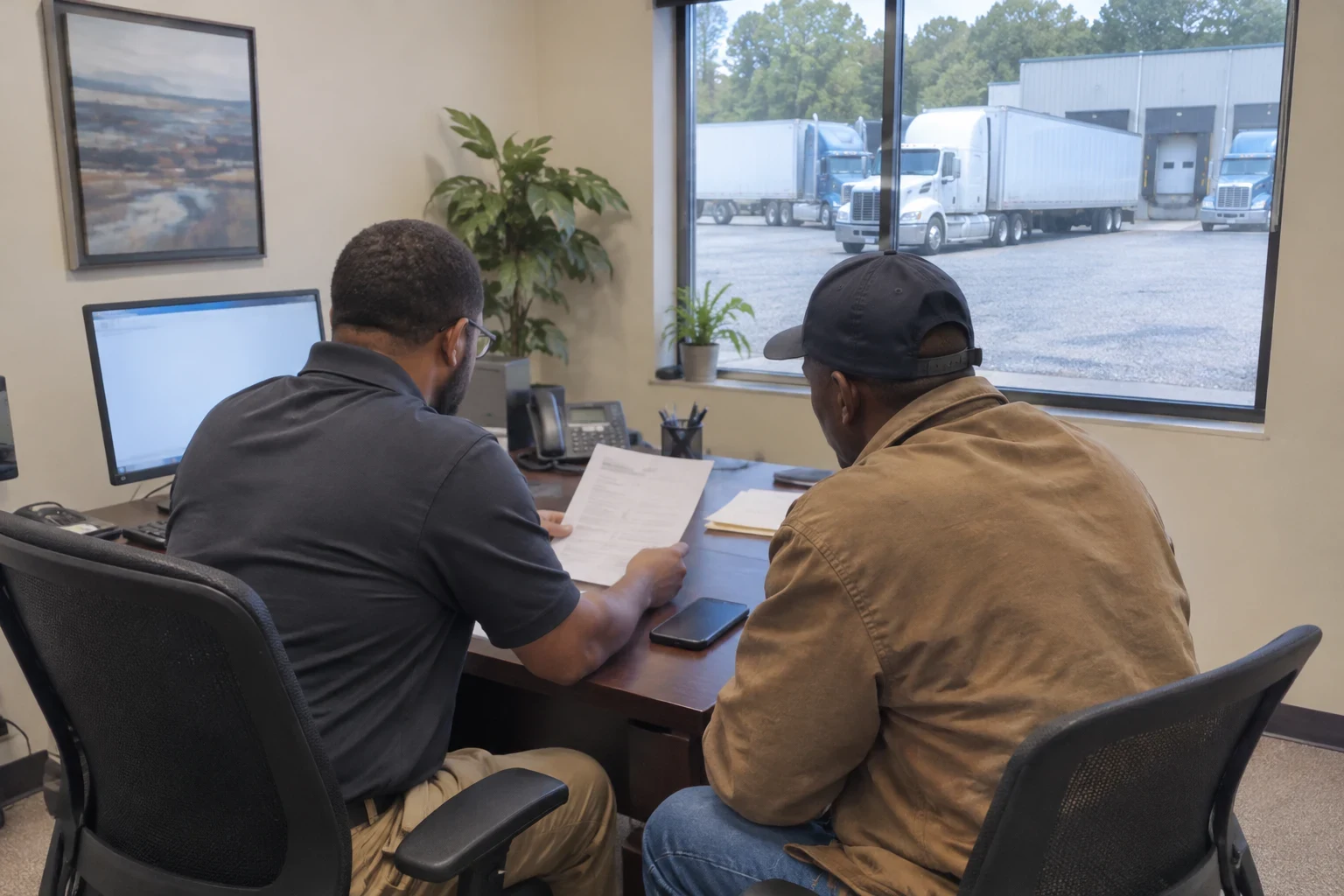
Our first conversation can happen by phone, over video or across a desk at our office. We cover your trucks, drivers, freight, operating radius and the contracts you haul under. Current dec pages and loss runs help, so have them handy if you can.
- 2
Shopping the market
We bring your details to carriers that write fleets of your size and type. The options come back side by side, and we explain the differences in limits, deductibles and exclusions in plain language.
- 3
Binding and filings
After you pick a program, we bind coverage, take care of the required filings and send certificates of insurance to the brokers and shippers who ask for them.
- 4
Our follow-up check-in
A few weeks after the policy begins, we call to make sure your unit schedule and driver list are correct. We also walk through how to report a new truck, a sold unit or a new hire, so your coverage stays current between renewals.
What moves the price of fleet coverage
No two fleets are rated alike, so we hold off on numbers until we understand your operation. Below are the things underwriters look at hardest. Once you know them, you can see which ones you can improve before the next renewal.
- How many units, and what kind
- Tractors, straight trucks and dump trucks each carry different rates. Newer equipment with a higher stated value also pushes up the physical damage side.
- Who is behind the wheel
- Each driver's MVR counts: years of experience, tickets and at-fault accidents. A single driver with a rough record can drag on the whole program.
- Your claims record and CSA standing
- Underwriters read your loss runs and your CSA scores to judge how the fleet has actually run. A few quiet years with few claims tends to bring more carriers to the table.
- Radius and commodities
- Local runs around metro Atlanta are rated differently than long-haul lanes, and hazardous or high-value freight costs more to cover.
- Limits and deductibles
- Higher liability and cargo limits cost more, while higher deductibles can lower the premium if your operation can carry that risk.
Questions fleet owners ask us
- How many trucks do I need to count as a fleet?
- Many carriers treat two or more power units as a fleet, though some programs start a bit higher. We will tell you which options fit your count. Small fleets often benefit just from having everything on one policy.
- How do I add a new truck mid-term?
- Call us with the VIN, year, make, value and the date it goes into service. We get it added and send updated certificates where needed. Do this before the truck runs a load, not after.
- What happens when a driver quits or I hire someone new?
- Let us know right away. New drivers usually need carrier approval based on their MVR before they drive, and removing a former driver keeps your records accurate. We go over this process during our check-in after binding.
- Can my leased owner-operators be covered too?
- Often, yes. Depending on your lease agreements, we can add them to the fleet program and set up non-trucking liability for when they are off dispatch. We will look at your leases before recommending anything.
- Do dash cams or telematics lower my premium?
- Some carriers give credit for them, and others do not. When we shop your fleet, we ask about the safety tools you already use and point out which carriers weigh them.
Let's look at your fleet together
Tell us how many trucks you run, who drives them and what you haul. We will lay out your options, set up the policy and check back once it is in place.